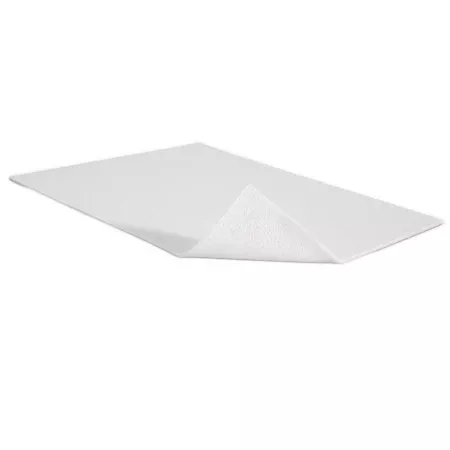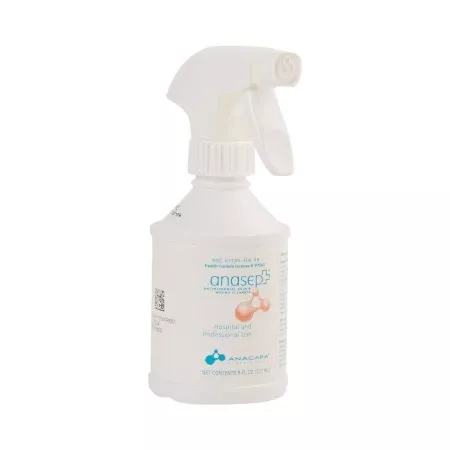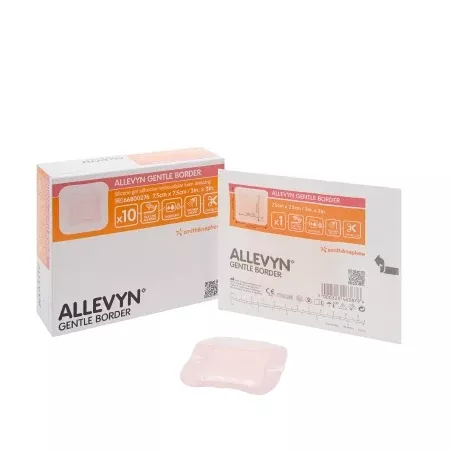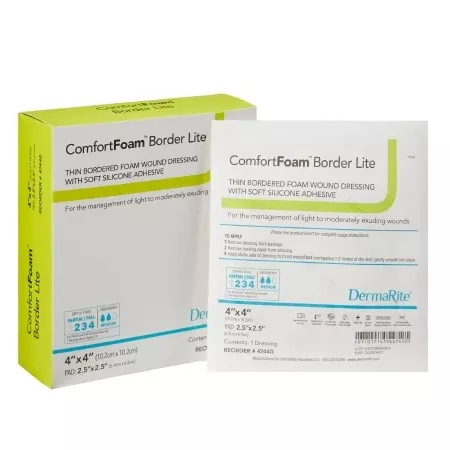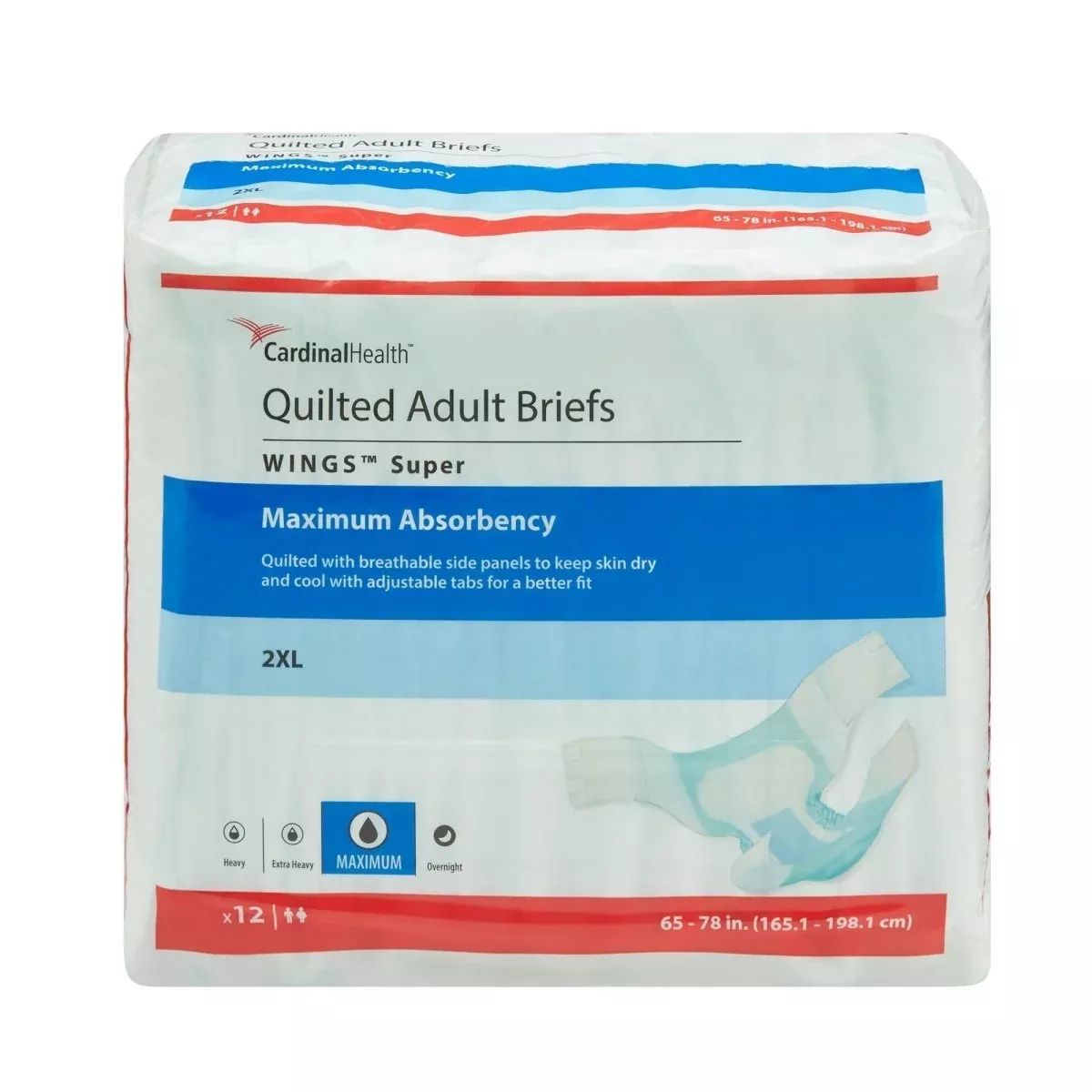
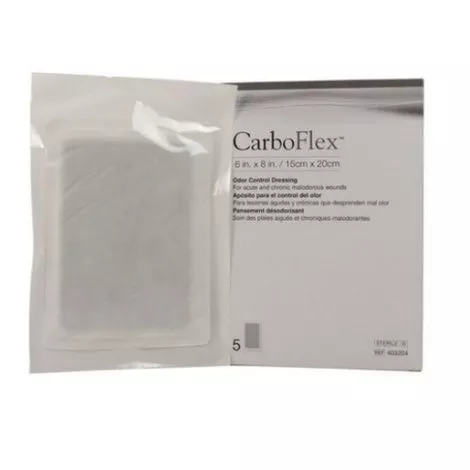
Features of CarboFlex Odor Control Dressing
- The Carboflex Odor Control Dressing features a charcoal layer to absorb odors
- Non-adhesive
- Sterile
- 5-layer design to support leaks
- Outer film is water-resistant
- Alginate Hydrofiber creates a moist healing environment
- Soft, non-adhesive wound contact layer
- Creates a gel in the presence of drainage
What to buy with Carboflex Dressing
- 3M Coban Self-Adherent Wrap – Sterile
- Medline Super Absorbent Sterile Abdominal Pads
- 3M Transpore Surgical Tape
How To Use Carboflex Gauze Dressing
Use CarboFLEX as a primary dressing for shallow wounds or on deeper wounds as a secondary dressing. Deeper wounds may require a cavity filler before application of CarboFLEX. For wounds with very large amounts of wound exudate, apply a foam dressing as the primary and then pair with CarboFLEX as a secondary dressing.
How To Apply and Remove Carboflex Non-Adhesive Dressing?
- Wound Preparation
Carefully cleanse the wound using sterile saline and then pat dry the surrounding peri-wound. - Application
Select the size of CarboFlex Dressing that’s large enough to overlap the edges of the wound by an inch. Make sure to apply the fibrous non-shiny side down over the wound. Secure with medical adhesive tape or with a bandage. - Removal
- An infected wound should be inspected frequently. Change the dressing if there is visible strikethrough from exudate or odor is no longer being absorbed.
- Noninfected wounds may be left undisturbed for up to three days.
- Carefully lift the dressing at the corner and gently remove it.
When to use CarboFlex Odor Control Non-Adhesive Dressing?
- Venous leg ulcers
- Fungating carcinomas
- Fecal fistula
- Infected surgical wounds
- Pressure ulcers
- Lacerations and post-surgical wounds