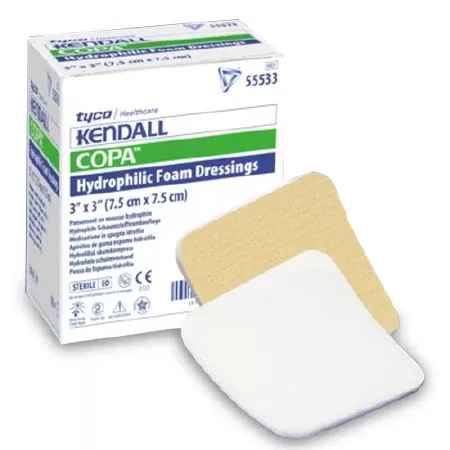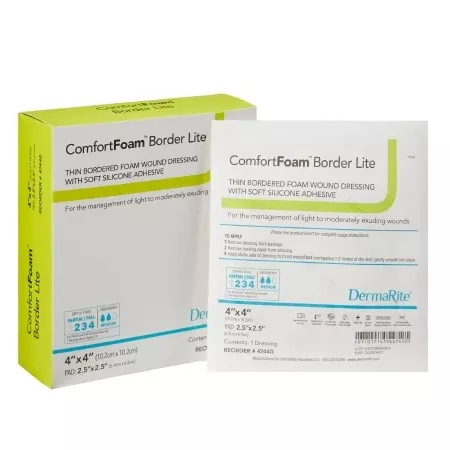
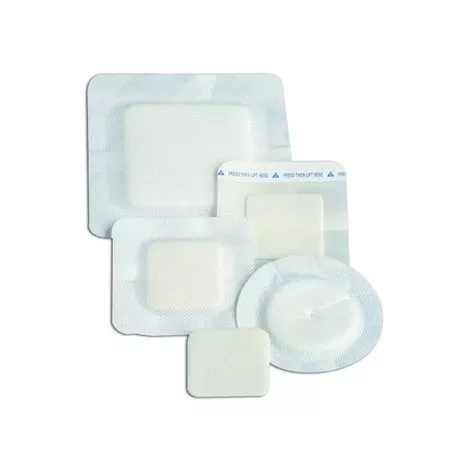
Polyderm Hydrophilic Foam Wound Dressing Features
- Deroyal Polyderm Border Hydrophilic Foam Wound Dressing is ideal for painful wounds requiring protection and cushioning
- Thick, soft construction that is extremely comformable and comfortable
- Protects granulating tissue for effective healing
- Primary or secondary dressing
- Sterile EO
- Not made with natural rubber latex
When to use Polyderm Border Hydrophilic Foam Dressing?
- Dermal ulcers
- Pressure ulcers
- Leg ulcers
- Secreting ulcers
- Second degree burns
- Acute wounds
- Lacerations and abrasions
- Tube sites
- Other superficial wounds
What to buy with Polyderm Border Foam Dressing
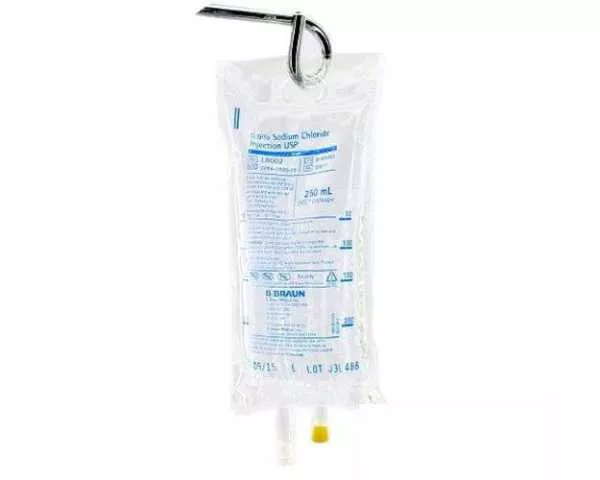
- Covidien Sterile Saline Water
- Hollister Restore Wound Cleanser
- Nice Pak PDI Sterile Wipes with Saline
How to use Polyderm wound Dressing?
- Inspect the packaging for damage or defects. Replace the entire dressing if the packaging is damaged
- Clean the wound of excess drainage and fluid, and thoroughly dry skin around the wound
- Open the dressing package
Adhesive Dressings
- Peel the paper liner from the back of the adhesive dressing
- Center the foam over the wound
- If the dressing has a film barrier, carefully peel away the clear carrier as you press the dressing into place
- Change dressing as needed when wet, soiled, leaking, or as directed by a licensed practitioner
- To remove the dressing, hold the edge of the adhesive border and carefully pull it in the direction of hair growth, lifting bandage from the wound
- Dispose of the soiled dressing
- Contraindications
- Third-degree burns
- Heavily bleeding wounds
- Individuals who are sensitive to or have had an allergic reaction to the dressing or its materials
- Use during surgical procedures as a surgical sponge
- Warnings
- Do not reuse, reprocess, or re-sterilize this dressing. This device is for single use only. Reuse, reprocessing, or re-sterilization may damage the dressing, and may result in injury, infection, or death
- Do not use if the individual package is opened or if the package or the dressing is damaged. Carefully inspect the dressing for damage or defects prior to use
- Seek medical attention if your wound is more severe than a minor abrasion, minor laceration, or minor scald and burn. Also seek medical attention if you have signs of an infection or allergic reaction such as fever, redness, pain, or swelling
- If you have any signs of an allergic reaction, discontinue using the dressing and rinse the wound and surrounding skin
- If applicable, ensure the dressing adheres to skin. Dressings with weak adhesives should be replaced immediately
- If dressing is ineffective or does not absorb, discard and replace
- If applicable, dispose of all used dressings with care to avoid exposure to or contamination of biohazard
- Cautions
- Ensure the dressing fully covers your wound
- If the dressing rips or tears prior to or during application, discard the torn dressing and replace it
- Prior to removal, ensure the dressing has not adhered to the wound. If the dressing has adhered to the wound, rinse with water or saline solution to loosen
- Take proper care when removing a dressing with adhesive as it may result in skin irritation
- If the adhesive is too strong or the skin is fragile, rinse with water or saline solution to loosen
- Storage And Transport Conditions
- Store at room temperature and avoid excessive heat and humidity